
Saturday, December 7, 2024
Notre Dame Returns!
A global-wide celebration begins today for the reopening of Notre Dame Cathedral after the devastating fire that closed it for three years. The opening of this faith center marks a substantial contribution to the history of this grand monument, but also shines a light on the crafting of every cathedral. These great cathedrals not only provided multi-generational employment for urban centers, but also spiritual and cultural centers for residents and visitors. It always confounds me that these cathedrals were dreamed and planned by dreamers and workers who would never see their completion. Do we begin ventures like this today? Perhaps we do when we plant trees, but in many cases our dreamers and planners do not think past their own lifespans. We need more of that. In any case, read more about cathedrals.


Wednesday, November 27, 2024
The Story Behind the Book
I just spent a wonderful weekend with educators at NCTE and had conversations about pairing fiction and nonfiction books in the classroom. While most of these discussions involved books about the environment an article this morning in Publishers Weekly Daily (PW Daily)reminded me of some other connections. I just had to share this with you all.
 A Murder in Massachusetts is the story of the murder that inspired America's first crime novel -- The Scarlet Letter. It reminded me of two other books that have a similar connection -- A Northern Light by Jennifer Donnelly, which weaves the true crime story of Grace Brown, who also inpsired Theodore Dreiser's An American Tragedy.
 I can already hear the classroom discussions!


Monday, October 14, 2024
The Story Behind Columbus Day
There is a lot of controversy about whether or not our nation should be celebrating Columbus Day. Obviously, we know that Cristoforo Colombo did not discover America in 1492 because there were already people living on the land. The story of the holiday, though, is much more complex and doesn't have as much to do about the Italian explorer who sailed under the Spanish flag. It has much more to do with the history of Italian immigrants in the United States.
 |
| From NY Public Library -- from 1892. |
Between around 1880 and 1924, more than 4 million Italians, mainly from Southern Italy and Sicily, (my ancestors included) arrived on American shores looking for opportunities unavailable to them in their home country -- like all immigrants coming to America.
 |
| Photo by Lewis Hine |
Like other immigrants they were not met with open arms. Read the White House Proclamation on Columbus Day from 2022.
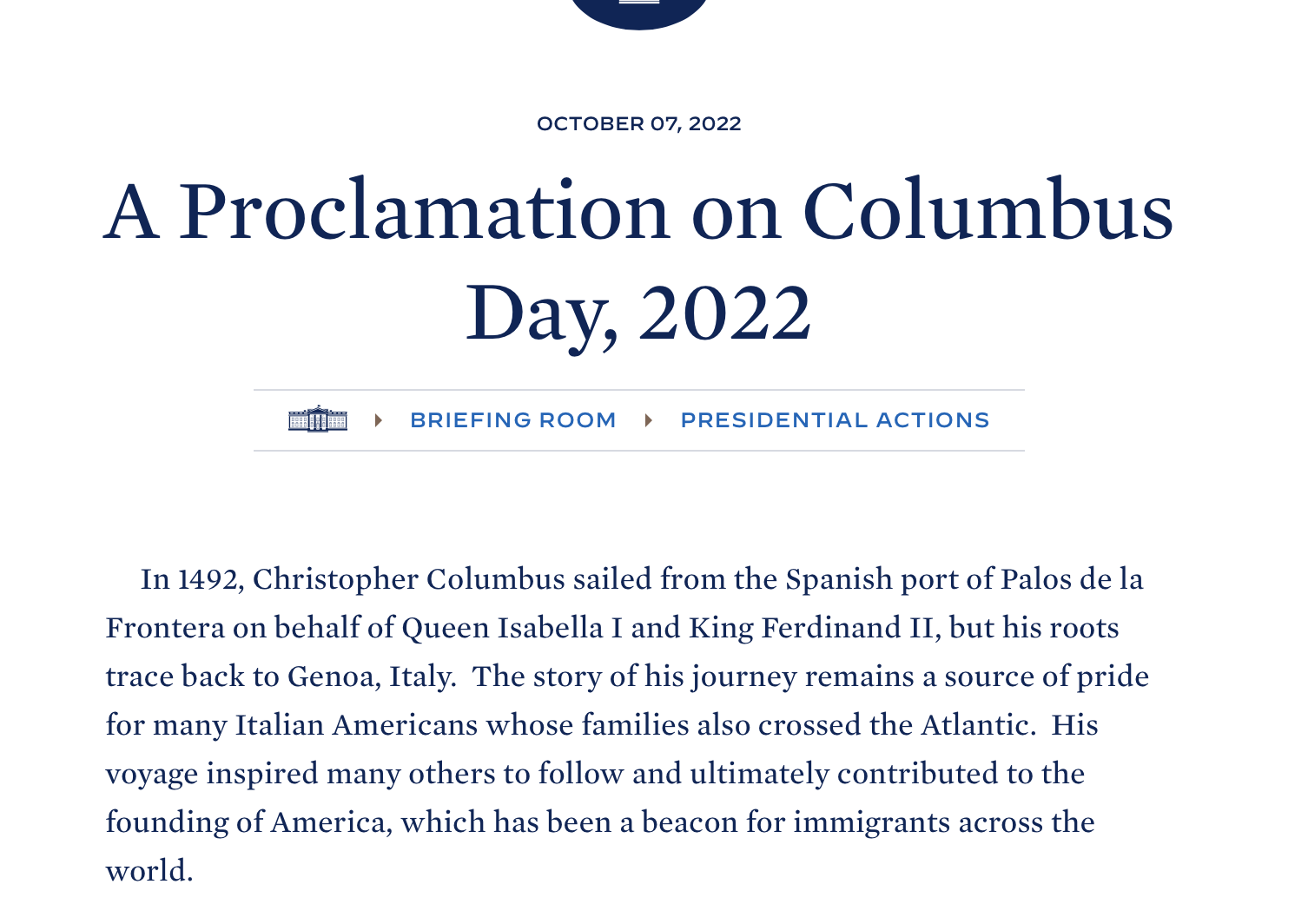
"Things have not always been easy; prejudice and violence often stalled the promisee of equal opportunity. In fact, Columbus Day was created in 1892in response to the anti-italian motivated lynching of 11 Italian Americans in New Orleans in 1891. During World War II, Italian Americans were even targeted as enemy aliens. But the hard work, dedication to community, and leadership of Italian Americans in every industry make our country stronger, more prosperous, and more vibrant."
I'll be writing more about Italian immigration in upcoming books. In the meantime I hope that folks will explore the deeper side of this story to understand the hold this holiday has on Italians today and why it is meaningful to look at history. Take some time to celebrate Italian Heritage Month in the days ahead.
Saturday, October 12, 2024
Italian Heritage Month 2
Are you looking for a few children's titles to enjoy this month during Italian Heritage Month?
Here are some favorites to explore:
 |
| Books by Donna Jo Napoli |

Tuesday, October 8, 2024
Italian Heritage Month
It's Italian Heritage Month and for the first time in my personal history I'm celebrating this month as a dual Italian American citizen, making this month even more meaningful for me. As part of the process of becoming a dual citizen I've been diving into the canon of Italian literature. I've read most in English, only diving into a few texts in the original Italian.
I've loved all the books I've read - both for adult readers and children. Here are a few of the adult books:


Monday, August 28, 2023
Interview with Biographer Laurie Wallmark
Women's history rocks! And so do these new picturebook biographies from Laurie Wallmark highlighting extraordinary women in STEM – one looking to the sky and the other facing opponents across a chess board. Laurie is also the author several other biographies, so she isn’t new to introducing readers to fascinating women who have made an impact in our world.

 Welcome, Laurie! Tell us about the inspiration for these latest biographies, HER EYES ON THE STARS and THE QUEEN OF CHESS.
I keep an ever-growing list of possible women in STEM to write about. At the time I chose Maria Mitchell, there was only one picture book out about her. This was an older title which fictionalized some of her life story. I thought kids deserved to learn the facts. So, I dug in, did the research, and wrote my book. But before HER EYES ON THE STARS came out, two more picture books about her were published! As far as I’m concerned, though, there’s always room for more good books about an important woman in STEM like Maria Mitchell.
The inspiration for THE QUEEN OF CHESS was completely different. In this case, an editor who knew about my other women in STEM biographies, asked me to write about Judit Polgár. The editor (and I) felt that it was important to showcase the achievements of a woman chess player. Since chess is so mathematical, I felt writing her story would be right up my alley.
These two biographies feature two very different women. Are there similarities that connect them?
There is one big similarity between both women—passion. From a young age, both pursued their fields with intense focus. Night after night, Maria Mitchell looked through a telescope on her rooftop observatory and studied the heavens. Judit Polgár spent hours each day practicing her chess moves and studying the patterns the pieces made.
Welcome, Laurie! Tell us about the inspiration for these latest biographies, HER EYES ON THE STARS and THE QUEEN OF CHESS.
I keep an ever-growing list of possible women in STEM to write about. At the time I chose Maria Mitchell, there was only one picture book out about her. This was an older title which fictionalized some of her life story. I thought kids deserved to learn the facts. So, I dug in, did the research, and wrote my book. But before HER EYES ON THE STARS came out, two more picture books about her were published! As far as I’m concerned, though, there’s always room for more good books about an important woman in STEM like Maria Mitchell.
The inspiration for THE QUEEN OF CHESS was completely different. In this case, an editor who knew about my other women in STEM biographies, asked me to write about Judit Polgár. The editor (and I) felt that it was important to showcase the achievements of a woman chess player. Since chess is so mathematical, I felt writing her story would be right up my alley.
These two biographies feature two very different women. Are there similarities that connect them?
There is one big similarity between both women—passion. From a young age, both pursued their fields with intense focus. Night after night, Maria Mitchell looked through a telescope on her rooftop observatory and studied the heavens. Judit Polgár spent hours each day practicing her chess moves and studying the patterns the pieces made.
 Judit certainly faced a number of challenges as she became the youngest grandmaster in the chess world. Did you face any challenges writing these biographies?
Writing about Maria Mitchell wasn’t too challenging. There were plenty of reference materials and, for the most part, they agreed with each other.
Judit Polgár was a different story, thought. Writing about her presented two challenges. First, there weren’t a lot of references I could use. Yes, her games were well documented. But a biography consisting only of game descriptions wouldn’t be that interesting. Second, she was such an amazing chess player that she rarely lost a game. It’s hard to add tension to a story when the person always wins.
Judit certainly faced a number of challenges as she became the youngest grandmaster in the chess world. Did you face any challenges writing these biographies?
Writing about Maria Mitchell wasn’t too challenging. There were plenty of reference materials and, for the most part, they agreed with each other.
Judit Polgár was a different story, thought. Writing about her presented two challenges. First, there weren’t a lot of references I could use. Yes, her games were well documented. But a biography consisting only of game descriptions wouldn’t be that interesting. Second, she was such an amazing chess player that she rarely lost a game. It’s hard to add tension to a story when the person always wins.
 Both books are such inspirational STEM titles, Laurie. Please tell teachers how they can use them in the classroom.
Teachers can download a free curriculum guide for HER EYES ON THE STARS from my website
THE QUEEN OF CHESS includes back matter that discusses the mathematics of chess.
Both books are such inspirational STEM titles, Laurie. Please tell teachers how they can use them in the classroom.
Teachers can download a free curriculum guide for HER EYES ON THE STARS from my website
THE QUEEN OF CHESS includes back matter that discusses the mathematics of chess.
 These STEM ladies led extraordinary lives. You have a knack for digging these stories out of the past, these women out of obscurity. Who will you feature next, Laurie Wallmark? Can you give us a hint?
I have another women in STEM title coming out next February—HER JOURNEY TO THE STARS: KALPANA CHAWLA, ASTRONAUT. Kalpana Chawla set her sights on flight at an early age. But achieving her dream of being among the stars took dedication, perseverance, and patience. Forging her own path, she became the first Indian American female astronaut, an inspiration for all girls to follow their dreams.
These STEM ladies led extraordinary lives. You have a knack for digging these stories out of the past, these women out of obscurity. Who will you feature next, Laurie Wallmark? Can you give us a hint?
I have another women in STEM title coming out next February—HER JOURNEY TO THE STARS: KALPANA CHAWLA, ASTRONAUT. Kalpana Chawla set her sights on flight at an early age. But achieving her dream of being among the stars took dedication, perseverance, and patience. Forging her own path, she became the first Indian American female astronaut, an inspiration for all girls to follow their dreams.
 Check out Laurie's website for more about her and her books.


Monday, May 22, 2023
Research for Nonfiction and Fiction Writers
It doesn't matter if you are writing nonfiction or fiction -- research is crucial in making your writing come alive. You might have to venture to some pretty obsure libraries to find just what you are looking for to obtain the details you need. Don't limit yourself to what you can find online. Those links can fill some needs, but look beyond for articles and books that might not be online. More on this to come!
Subscribe to:
Posts (Atom)